Reviewing Watercolor Adorable Christmas Clip Art for Embroidery
As a designer who has spent countless hours digitizing and stitching out holiday motifs, I approach every new asset with a mix of excitement and skepticism. The market is flooded with festive graphics, but few translate well from screen to thread. Recently, I evaluated the Watercolor Adorable Christmas Clip Art collection to determine its viability for real-world embroidery projects. My goal was not just to admire the aesthetics, but to assess how these illustrations hold up under the needle, particularly for small business owners and crafters looking to elevate their seasonal offerings.
First Impressions: Mood and Visual Personality
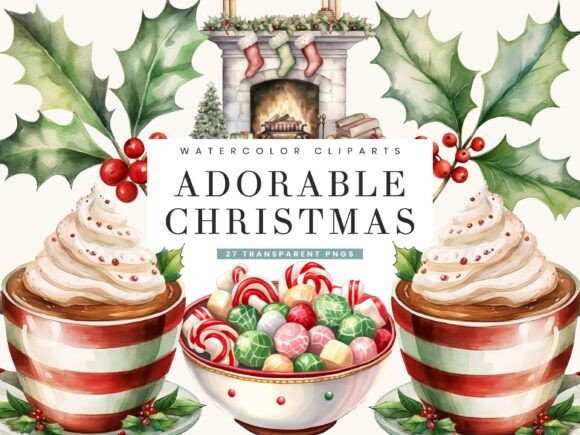
The immediate appeal of this collection lies in its soft, hand-painted aesthetic. Unlike the rigid, vector-heavy graphics often found in standard clip art libraries, these pieces possess an organic warmth. The watercolor technique introduces gentle gradients and imperfect edges, which can be challenging to replicate in embroidery but offer a high reward if handled correctly. The mood is nostalgic and cozy, perfectly suited for the current trend of "slow living" and handmade authenticity.
For an embroidery designer, the layout and detail level are critical. These designs avoid excessive micro-details that often cause thread breaks or nesting issues. Instead, they rely on broader shapes and color blocks. This suggests that while they are categorized as Illustrations, they are primed for conversion into machine embroidery designs that prioritize texture over photorealism. The visual personality is playful yet refined, making it a strong candidate for boutique branding rather than mass-produced novelty items.
Real-World Application: From Screen to Stitch
To test the practicality of the Watercolor Adorable Christmas Clip Art, I envisioned a specific project: a custom embroidered tote bag for a local holiday market. Tote bags are a staple for Etsy sellers and small shop products because they offer a large, flat canvas. However, the fabric texture of canvas or cotton twill can interfere with delicate details.
In this scenario, the watercolor style works in our favor. Because the original art features blended colors, we can mimic this effect using variegated threads or careful color blocking with solid threads. For a sweatshirt embroidery project, the softness of the design complements the fuzzy texture of fleece or French terry. A rigid, high-contrast digital look might clash with the fabric, but the organic feel of these illustrations blends seamlessly. I also considered using these motifs for baby embroidery, such as on onesies or burp cloths. The "adorable" aspect of the title is earned here; the characters and elements are gentle and non-threatening, appealing directly to parents seeking personalized gifts.
Apparel and Home Decor Versatility
Beyond totes and sweatshirts, these designs show promise for kitchen towels and aprons. Holiday embroidery often dominates the kitchen sector during Q4. The watercolor aesthetic feels at home on linen or cotton blends, adding a touch of elegance to functional items. For an embroidered patch, however, caution is needed. Patches require dense stitching and clean borders to prevent fraying. If you plan to create patches using these assets, you must simplify the outer edges and ensure the internal details are not too fine for the smaller hoop size typically used for patches.
Cap embroidery presents another challenge due to the curved surface. While the central motifs of the Watercolor Adorable Christmas Clip Art could work on the front panel of a dad hat, any extended horizontal elements might distort. I recommend isolating the main subject—such as a single character or ornament—and avoiding complex backgrounds when stitching on curved surfaces like caps or pillows.
Technical Considerations and Stitching Strategy
Translating watercolor into thread requires a strategic approach to stitch types. You cannot simply auto-digitize these images and expect a professional result. To capture the soft transitions, a combination of fill stitch and satin stitch is essential. Large areas of color should use a tatami or fill stitch with varying angles to create depth, mimicking the brushstrokes of the original art. Edges should be treated carefully; a heavy satin stitch border might look too harsh against the soft interior. Instead, consider a running stitch or a light bean stitch to define shapes without creating a hard outline.
Stitch density is another crucial factor. Watercolor implies transparency and lightness. Over-digitizing with high density will make the fabric stiff and ruin the delicate feel. For thin fabric or stretchy material, keeping the density moderate and using a proper stabilizer is non-negotiable. I strongly advise testing the design on scrap fabric first. Check how the thread colors interact with the fabric background. On dark fabric, you may need to adjust the palette or add an underlay to ensure the colors pop without becoming muddy.
Navigating Fabric and Hoop Constraints
When working with textured fabrics, the intricate gradients of the Watercolor Adorable Christmas Clip Art might get lost. In such cases, simplifying the color count can improve clarity. For small hoop sizes, such as 4x4 inches, you must verify that the smallest details are legible. Tiny lettering or minute decorative accents often disappear in small formats. If the design includes text, ensure it is thick enough to be stitched clearly, or remove it entirely for a cleaner look.
Layered garments, such as hoodies or jackets, require attention to puckering. The watercolor style often involves large filled areas, which can pull on the fabric if not stabilized correctly. Use a cut-away stabilizer for knit fabrics and a tear-away for wovens. Always inspect the finished product for gaps or thread nests, especially in areas where color changes occur frequently.
Commercial Value and Brand Consistency
For commercial embroidery and Etsy sellers, the uniqueness of your design assets directly impacts buyer engagement. The Watercolor Adorable Christmas Clip Art offers a distinct advantage: it looks handcrafted even before it is stitched. This aligns well with brands that emphasize quality and artistry. Using these illustrations in your printable mockup previews can significantly enhance perceived value. Customers are drawn to products that look soft, inviting, and unique.
However, professionalism is key. Ensure that the final embroidered product matches the quality of the digital preview. Inconsistent stitching or poor color choices can erode customer trust. Before listing items, compare light and dark fabric backgrounds to ensure versatility. If you are selling digital embroidery files derived from these illustrations, confirm licensing terms explicitly. Not all clip art licenses allow for the redistribution of digitized files. Always check whether the license permits commercial use for finished products versus digital assets.
Final Verdict for Designers and Makers
The Watercolor Adorable Christmas Clip Art is a valuable resource for designers willing to put in the digitizing effort. It is not a plug-and-play solution for beginners who rely solely on auto-digitizing software. However, for those who understand stitch density, thread colors, and fabric behavior, it provides a beautiful foundation for high-end holiday embroidery. Whether you are creating a personalized gift, a boutique product line, or custom apparel, these illustrations offer the charm and flexibility needed to stand out in a crowded market. Just remember to test, adjust, and respect the limitations of the medium to achieve the best results.