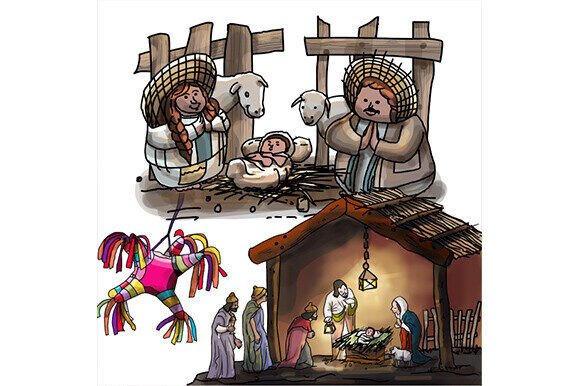
Reviewing Christmas in Mexico Clipart for Embroidery
As a designer who has spent countless hours digitizing and stitching out holiday motifs, I approach every new Christmas in Mexico Clipart with a mix of excitement and scrutiny. The holiday season is the busiest time for any craft business, and having the right design assets can make or break your product line. This particular set of Illustrations caught my eye because it moves away from the standard snow-and-pine aesthetic, offering a vibrant, cultural twist that feels fresh and inviting. But does it translate well from a digital screen to actual thread on fabric? That is the question every serious Etsy seller and apparel decorator needs to answer before committing to production.
First Impressions: Mood and Visual Personality
The immediate impact of this Christmas in Mexico Clipart is warmth. The visual personality is lively, utilizing bold shapes and thematic elements that suggest celebration rather than quiet winter stillness. For an embroidery designer, the layout is crucial. These designs often feature distinct silhouettes—think poinsettias, traditional patterns, or festive icons—that lend themselves well to clear stitching. The detail level appears balanced; it is intricate enough to look professional but not so dense that it becomes a nightmare to stitch out on standard home machines. When I visualize this as a machine embroidery design, I see potential for strong visual appeal, provided the digitizer respects the original art’s flow.
The mood created is one of inclusive joy. For boutique branding, this is invaluable. It allows small shop owners to offer something unique that stands out in a saturated market of generic red-and-green motifs. Whether you are creating a personalized gift or a batch of inventory for a craft fair, the cultural resonance of these images adds a layer of depth and storytelling to your finished product.
Real-World Application: From Screen to Stitch
To truly evaluate this embroidery file, I mentally placed it into several real-life scenarios. Let’s consider a custom tote bag design. Tote bags are typically made of canvas or heavy cotton, which provides a stable base for embroidery. The bold lines in the Christmas in Mexico Clipart would pop beautifully against a natural linen background. Using a combination of satin stitch for borders and fill stitch for larger areas would give the design texture and dimension. The contrast between the vibrant thread colors and the neutral fabric would create a high-end look that justifies a higher price point.
Another practical application is sweatshirt embroidery. Here, the fabric texture changes the game. Fleece and cotton blends are thicker and softer. If the design includes fine details, they might get lost in the pile of the fabric. However, if the clipart relies on strong, recognizable shapes, it works perfectly. I imagine a crewneck sweatshirt with a small, centered chest emblem derived from this collection. It feels modern and understated yet festive. For baby embroidery, such as on a onesie or blanket, the softness of the design is key. You would need to ensure the stitch density is low enough to keep the garment comfortable against sensitive skin, avoiding stiff, cardboard-like patches of thread.
For those selling digital embroidery files, providing mockups is essential. A printable mockup showing this design on a kitchen towel or a pillow cover helps customers visualize the end result. The versatility of these Illustrations means they can adapt to various embroidery projects, from aprons for the holiday cook to caps for festive outings.
Navigating Technical Challenges
While the aesthetic is strong, practical execution requires caution. Not every fabric behaves the same way. When working with stretchy fabric like jersey knits for t-shirts, stabilization is non-negotiable. Without proper stabilizer, the design will pucker, distorting the beautiful lines of the Christmas in Mexico Clipart. I always recommend testing on scrap fabric first. This simple step saves hours of frustration and wasted materials.
Small hoop sizes present another challenge. If you are scaling down the design for a embroidered patch or a pocket detail, you must check the readability of tiny elements. Fine lines may merge or break during stitching. In such cases, simplifying the design or increasing the size slightly can maintain clarity. Similarly, on dark fabric, thread color choice becomes critical. You need high-contrast thread colors to ensure the design doesn’t disappear into the background. Testing in black and white mockups can help you judge value contrast before you even thread the needle.
Curved surfaces, like caps or hats, require careful hooping and often a different digitizing approach. The stitch density must be managed to prevent the cap from collapsing or looking bulky. If the clipart features dense areas, consider converting parts to applique design techniques, where fabric pieces are stitched down, reducing thread bulk while adding texture.
Enhancing Brand Value and Customer Trust
Using high-quality, culturally rich designs like Christmas in Mexico Clipart elevates your brand. It shows attention to detail and an appreciation for diverse traditions. This builds customer trust and engagement. When buyers see a well-executed holiday embroidery piece, they perceive higher value. It transforms a simple item into a keepsake. For commercial embroidery projects, consistency is key. Ensure that the style of this clipart matches your other design assets to maintain a cohesive brand identity.
Moreover, the uniqueness of the theme can drive buyer engagement. In a sea of standard holiday items, a small shop product featuring Mexican Christmas motifs stands out. It appeals to customers looking for something different, whether for their own home or as a thoughtful wedding gift or holiday present. The emotional connection to the design can lead to higher conversion rates and repeat business.
Practical Designer Notes for Success
Before you launch your next collection using this Christmas in Mexico Clipart, keep these practical tips in mind:
- Test on Scrap Fabric: Always stitch a sample on the actual fabric you plan to use. Check for puckering, thread breaks, and color accuracy.
- Check Thread Contrast: Ensure your chosen thread colors stand out against the fabric. Use a color wheel to find complementary or contrasting shades.
- Review Stitch Density: High density can cause stiffness and fabric distortion. Adjust settings if necessary, especially for lightweight or stretchy materials.
- Confirm Hoop Size: Make sure the design fits comfortably within your hoop, leaving enough margin for secure clamping.
- Inspect Small Details: Zoom in on the digital file. Are there tiny elements that might not stitch well? Consider simplifying or removing them for smaller sizes.
- Use Proper Stabilizer: Match the stabilizer to the fabric. Cut-away for knits, tear-away for wovens, and wash-away for delicate or sheer fabrics.
- Verify Licensing: Before selling finished products or digital embroidery files, confirm the license terms. Ensure you have commercial rights if you plan to sell items made with this design.
In conclusion, Christmas in Mexico Clipart offers a refreshing and vibrant option for holiday embroidery. With careful attention to technical details and fabric selection, it can become a standout element in your craft business. Whether you are creating custom apparel, home decor, or gifts, this design has the potential to bring joy and cultural richness to your work. Embrace the creativity, respect the technical constraints, and let your stitching shine.